
Guiding Light for Harm Reduction: Spotlight on Angel Gold
From the very first moments of CHR’s journey, Angel Gold has been a guiding light—helping shape the organization’s values, vision, and enduring commitment to community care. As President of the Board and one of the founding members, Angel’s heartfelt, strategic leadership has anchored CHR through seasons of challenge and growth.
Angel first crossed paths with CHR’s founder, Lu, when the organization was just a seed of an idea. “I first met Lu when they were starting CHR. At the time, they were providing harm reduction services in our community—work that is very close to my heart—while also establishing a formal nonprofit organization,” Angel recalls. With years of experience in nonprofit work, Angel brought a passion for prevention education, expanding harm reduction access, fostering trust, and honoring every individual’s autonomy.
Despite coming in with a background in nonprofit programming, serving on a board was new territory. “I came in thinking I knew a little—and quickly realized I had a lot to learn. What I love about CHR is that it doesn’t just follow the usual nonprofit playbook. We’ve leaned into creating mission and value statements that actually mean something, not just words on paper, and they’ve given CHR direction without locking us into rigid structures.” Angel is especially proud of the staff: “And I’m especially proud of the staff—their intelligence, creativity, and compassion shine through in how they affirm the dignity of people navigating daily challenges, while showing that support can be human, flexible, and real.”
As Board President, Angel is mindful of the challenges inherent to leadership. “One of the biggest challenges I face on the Board is recruitment—finding people who are not only interested, but also aligned with our values and ready to contribute. Supporting our Executive Director in meaningful ways is another challenge; I want to make sure they never feel like they’re carrying the full weight of the work alone.”
Serving a rural community comes with unique hurdles. “One of the biggest challenges in a rural area is the lack of resources—people don’t have easy access to food, transportation, or treatment, which makes getting help feel much harder. CHR is mobile rather than a fixed site, so we can meet people where they are. ”
Angel believes lasting solutions require creative, flexible support. “To help relieve some of these challenges, we need to rethink how we approach support. Beyond reducing barriers to treatment and shelter, it’s about recognizing that abstinence-only programs don’t work for everyone, and people use substances for many different reasons—we don’t always know their story, and we don’t have to. Sometimes the most important thing is simply building trust and providing basic needs, which can give someone a chance to step out of crisis mode. It takes creative thinking and approaches that go outside the box to truly support people where they are.”
Angel sees the Board’s greatest contribution as holding space for innovation and safety. “Our board plays a key role in ensuring CHR can do its work safely, effectively.. One way we do this is by creating mission and value statements that provide guidance while remaining flexible enough to meet the needs of participants in real-world situations. We also focus on understanding the law, keeping staff safe in unpredictable settings, and providing the professional development and support our team needs to feel confident in this challenging work.” Expounding on the Boards approach, she continues, “Promoting self-care, offering fair compensation, and supporting low-threshold employment are all part of how we value our staff—all of whom bring lived experience, knowledge of the judicial system, or firsthand understanding of substance use.”
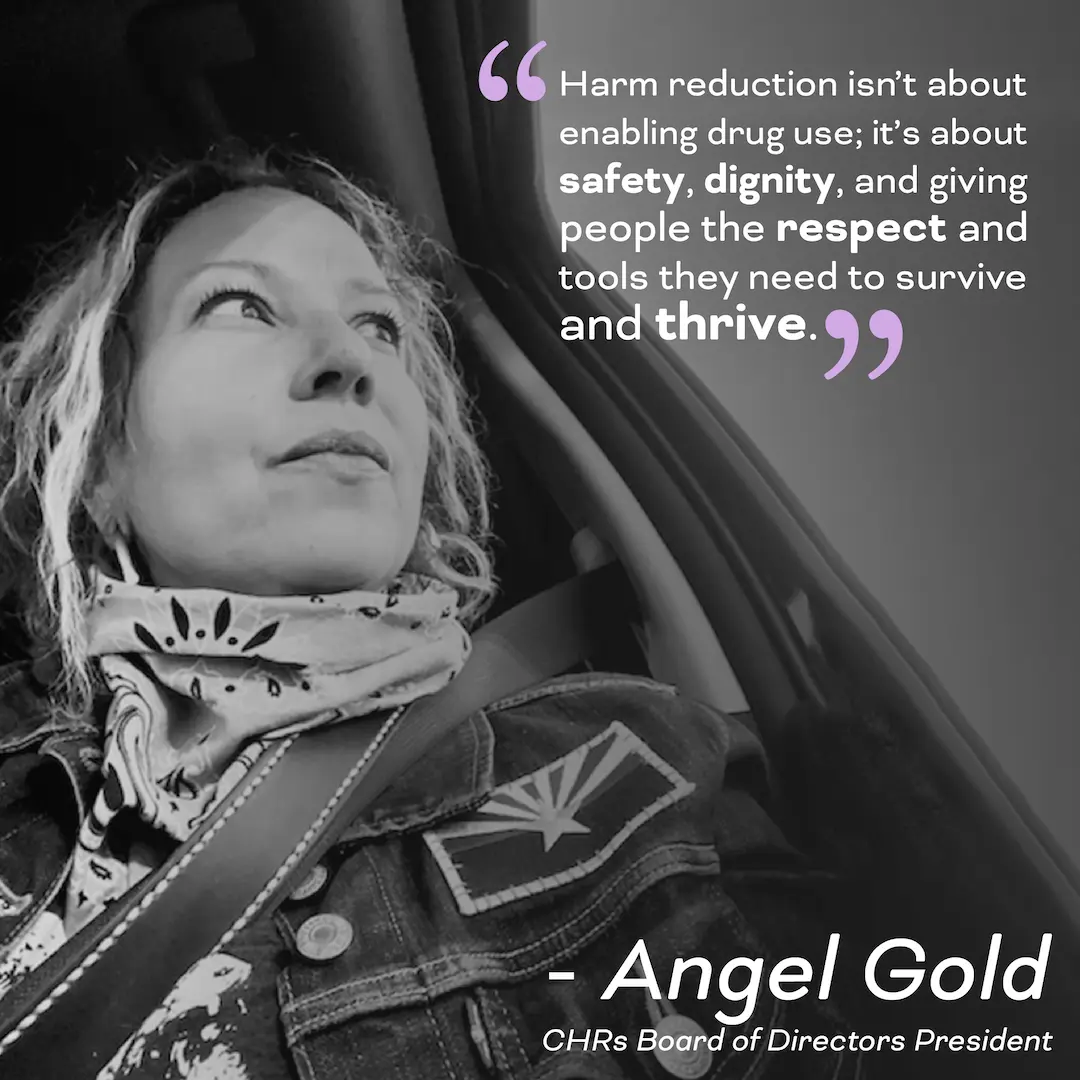
Harm reduction is woven deeply into Angel’s worldview and family history. “Harm reduction completely changed how I see the world—it just made sense to me…my understanding deepened through my family. I have two brothers who have struggled with addiction. My older brother used heroin and meth, cycling in and out of jail, and eventually died alone from an overdose. That experience showed me, in the most painful way, how cruel life can be when people are judged, stigmatized, or denied basic support…Harm reduction isn’t about enabling drug use; it’s about safety, dignity, and giving people the respect and tools they need to survive and thrive.”
Looking ahead, Angel dreams big: “I see CHR continuing to hold space and evolving into a micro-community that provides housing, mental and physical health services, treatment, employment, job training, and skill-building opportunities like growing your own food, carpentry, and animal care—a self-sustaining community. – These are big time goals, but that’s just it, this work is big time!”
To those considering nonprofit and harm reduction leadership, Angel’s advice is simple but profound: “For anyone considering nonprofit leadership in areas like harm reduction and basic needs support, my advice is to show up fully, be willing to learn continuously, center respect for the people you serve, and recognize that real impact comes from collaboration and flexibility. This work is complex, often unpredictable, and deeply rewarding when approached thoughtfully.”
Before signing off, Angel reminds us: “Keep shining. We are all light beings.” 🌟