
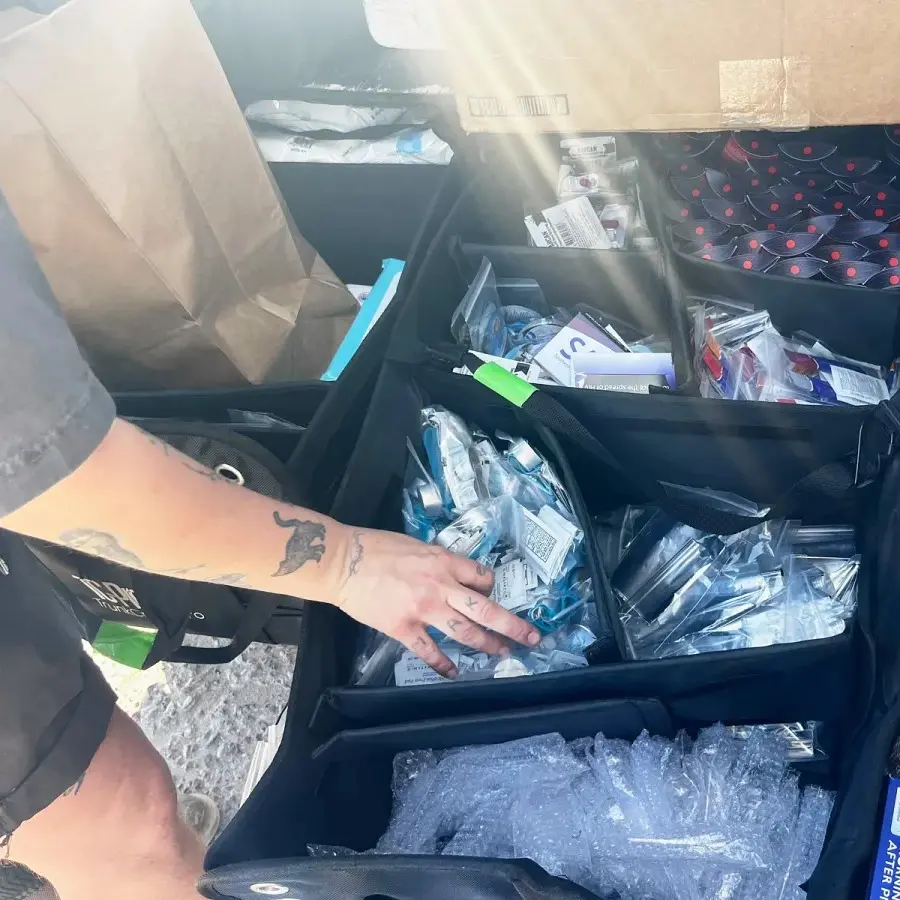
Cochise Harm Reduction’s work on the ground in Cochise County is as much about connection as it is about supplies, if not more. Participants describe the van’s rounds as sounding like “a long-standing game of telephone” and a neighborhood check-in, as staff and volunteers trade directions, updates, and quick welfare checks across encampments, remote desert roads, and mobile home parks. Executive Director Lu Funk explains the philosophy behind that work: “
Staff and volunteers emphasize low‑barrier, non‑judgmental support and meeting people where they are. Funk notes “The main misconception that I’m hearing, even from providers, is that if people don’t come to resources they don’t need resources,”; instead, CHR finds that when services are brought directly and made low‑barrier, “people actually engage in them.”
Outreach coordinator Ashley Iannacone often starts conversations about test strips by “casually outing myself as a drug user to convey that I’m a peer,” then focuses on practical tips: always administer naloxone, perform rescue breathing, and try not to use alone. Participants like Jaden Paul T. and St. David resident Sandra Falls describe CHR as a lifeline for food, clothing, and safer‑use supplies; Falls says, “They always text me, ‘hey do you need us to stop by today?’” and relies on the van between infrequent food bank trips.
Extreme weather and isolation add urgency to this work. Many CHR participants live in mobile homes, RVs, or tents and face both winter cold and dangerous summer heat, compounded by methamphetamine or fentanyl use that increases vulnerability to heat illness. One participant asks staff how to recognize heat stroke because, after nearly freezing, he doesn’t “want to be dying of heat, or freezing.” CHR’s model, combining harm reduction, food access, and welfare checks, helps bridge gaps in a frayed rural safety net at a time when Cochise County’s poverty rate outpaces national rural averages. Funded through a mix of state marijuana restitution dollars, grants, local donations, and church support, the organization invites community members to get involved through donations, volunteering (including in their kitchen and outreach programs), and by helping spread accurate, stigma‑reducing information about drug use and overdose prevention.